
The Naxos Apothecary: a little piece of the Cyclades, bottled
There are some places that are difficult to leave behind. Naxos is one of them.
Perhaps it is the smell of wild herbs carried across the hills, the dry warmth of the landscape, the white villages scattered across the mountains, or simply the particular feeling of an Aegean summer. Whatever it is, the island has a way of staying with people long after they have returned home.
For The Naxos Apothecary, that feeling has become the foundation of an entire brand.
At first glance, it might appear to be a luxury beauty and fragrance company. Look a little closer, however, and the story becomes much more interesting. The brand brings together the traditions of the Greek apothecary, the botanical richness of Naxos and a distinctly contemporary approach to design, creating products that are as much about a sense of place as they are about personal care.
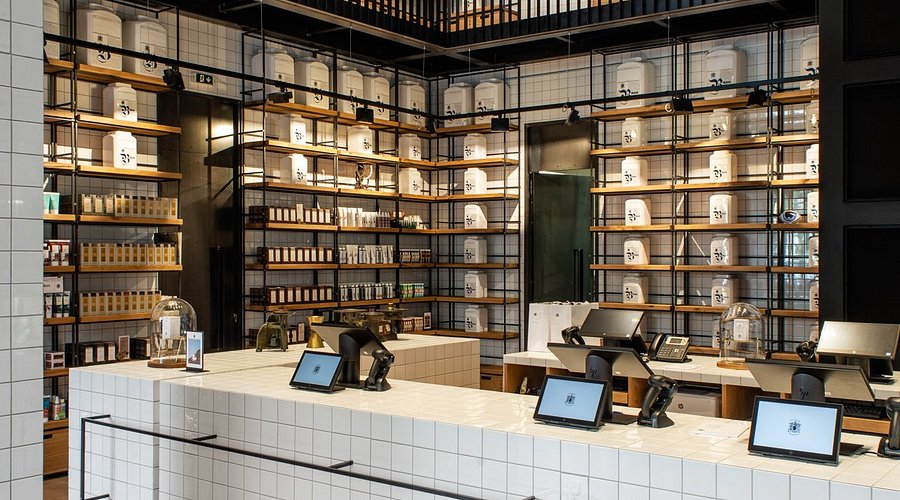
The story begins not on Naxos, but in Athens.
In 1988, Mr. Tzivanidis’ Pharmacy opened behind the historic Kallimarmaron. The pharmacy developed a reputation around homeopathy, phytotherapy and herbal cosmetics, creating a foundation of knowledge that would eventually lead to something very different. Nearly three decades later, that experience was combined with a long standing connection to Naxos to create The Naxos Apothecary in the centre of Athens, close to Syntagma Square.
The result is a brand with one foot in the traditional pharmacy and the other in modern luxury.
That balance is important. The word “apothecary” can easily suggest something nostalgic: wooden shelves, glass jars, handwritten labels and remedies from another era. The Naxos Apothecary certainly draws on that visual language, but it does not seem interested in simply recreating the past. Instead, it takes the idea of the apothecary and gives it a distinctly Greek, contemporary identity.
And at the centre of that identity is Naxos.
The largest island in the Cyclades is unusually fertile by Aegean standards, with a rich variety of vegetation and a distinctive collection of endemic species. The Naxos Apothecary uses that natural environment as more than a marketing theme. The company says its products are inspired by the island’s history, culture, heritage and endemic flora, combined with its experience in phytotherapy.
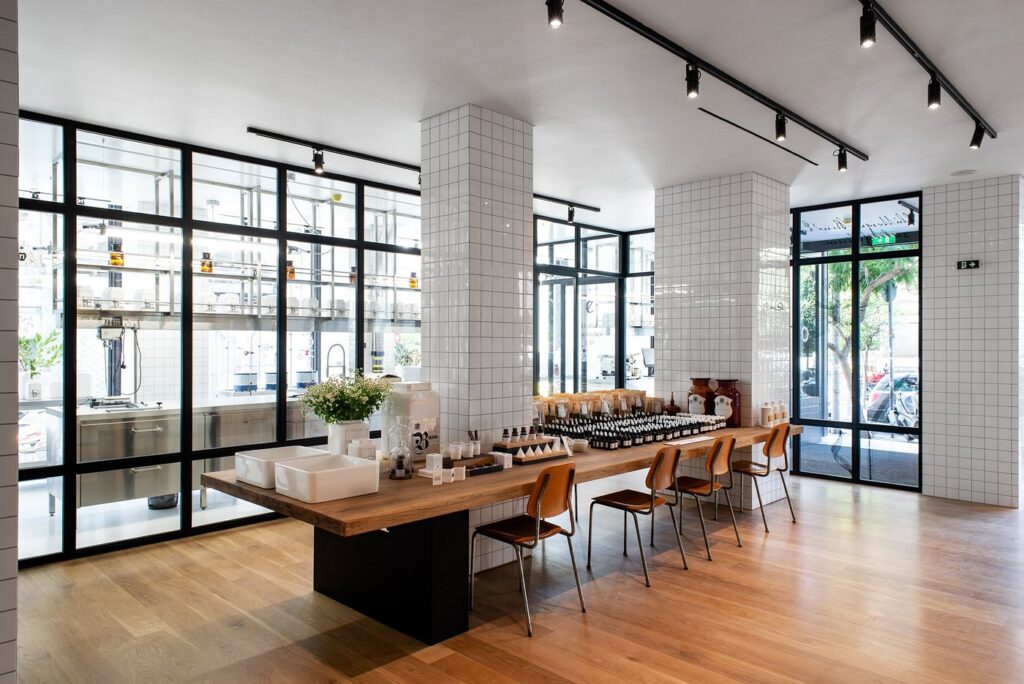
That relationship between place and product is perhaps most obvious in its fragrances.
Rather than giving its perfumes generic names, the collection takes its inspiration from locations around Naxos. Chora, Alyko, Koronos, Sangri and Chalki are not simply names chosen to sound Mediterranean. They are places on the island, and the intention is to turn the character and memory associated with them into something that can be experienced through scent.
It is a simple idea, but an effective one. Fragrance is one of the strongest ways of preserving a memory. A particular smell can bring back a street, a landscape or an entire summer almost instantly. In that sense, a perfume inspired by a Naxian village is not merely a cosmetic product. It becomes a small reminder of somewhere else.
The same philosophy runs through the wider collection. Skincare, body care, hair care, aromatherapy, fragrances and candles are all part of the range, with Naxian herbs and botanical ingredients playing an important role. Athens International Airport, which carries the brand, describes the collection as a combination of Naxos, Greek herbs and design, including herbal skincare, fragrances inspired by Naxian villages, soaps, shower products and candles.
There is also a more unusual side to the concept.
The Naxos Apothecary describes four in house laboratories covering homeopathy, phytotherapy, herbal cosmetics and nutrition. The company says these operate in controlled environments and that their processes are visible to visitors, reinforcing the idea that the apothecary is not simply a carefully designed retail space but a place rooted in a longer tradition of herbal and pharmaceutical practice.
That distinction helps explain why the brand feels different from many of the products associated with Greek tourism.
Greece has become increasingly successful at turning its natural ingredients and cultural heritage into international products. Olive oil, honey, herbs, cosmetics and fragrances are now part of a growing Greek lifestyle sector. But there is always a danger that heritage becomes little more than decoration: a blue and white package, a reference to an island, perhaps a picture of the sea.
The Naxos Apothecary takes a more specific route.
Its story is not simply about Greece. It is about one particular island and the relationship its creators have with it. Naxos provides the names, the botanical inspiration and much of the emotional character of the brand.
That sense of place also extends to the physical experience.
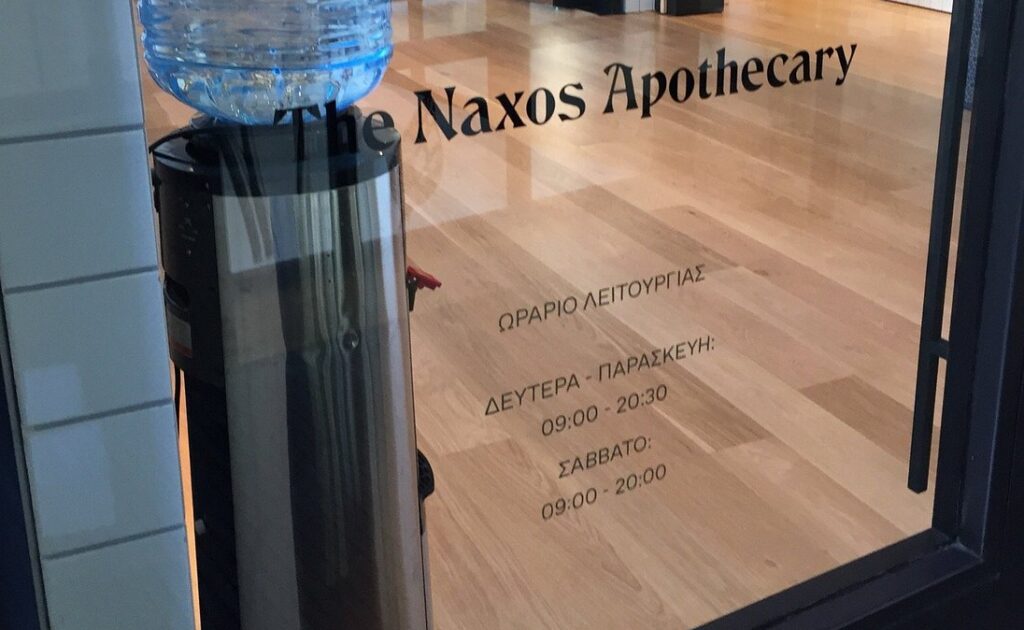
The Athens flagship, at Kolokotroni 3–5 and Voulis, near Syntagma Square, presents the brand in the centre of the capital rather than on the island that inspired it. It is an interesting choice. A visitor can encounter Naxos without travelling to Naxos, through the ingredients, scents, objects and atmosphere that the brand has brought into the city.
The concept has also travelled further. The Naxos Apothecary has a presence at Athens International Airport, where its products sit alongside a selection of Greek design objects and accessories, extending the idea of taking something distinctly Greek home with you.
This may be the most compelling part of the story.
For generations, the Greek souvenir has largely been about objects that represent Greece from the outside. The Naxos Apothecary offers something more personal. Instead of taking home another symbol of Greece, you can take home a scent, an ingredient or an everyday product that reminds you of a particular landscape.
It is a subtle shift, but an important one.
The brand is not really selling Naxos as a postcard. It is attempting to translate the island into something sensory and contemporary.
That is also why the idea works beyond the traditional tourist market. You do not need to have visited Naxos to appreciate a fragrance named after one of its villages. But if you have, the connection becomes even more immediate. The product can become a kind of bridge between the place itself and the life you return to afterwards.
Perhaps that is what makes The Naxos Apothecary worth noticing.
It is easy to create a product inspired by Greece. It is much harder to create a brand with a genuine sense of place.
Here, the story begins with an Athens pharmacy, moves through decades of experience with herbs and natural products, and eventually finds its identity on an island in the Aegean. The result is a brand that does not simply borrow from Greek heritage, but attempts to reinterpret it for a modern audience.
And maybe that is the best kind of souvenir.
Not something that sits on a shelf collecting dust, but something you use. Something you smell. Something that, years later, can suddenly transport you back to a warm afternoon in the Cyclades.
A little piece of Naxos, carried home.
Short URL: https://www.choicetv.org.uk/?p=9501
