
How a Greek pharmacy turned the country’s flora into a global beauty story
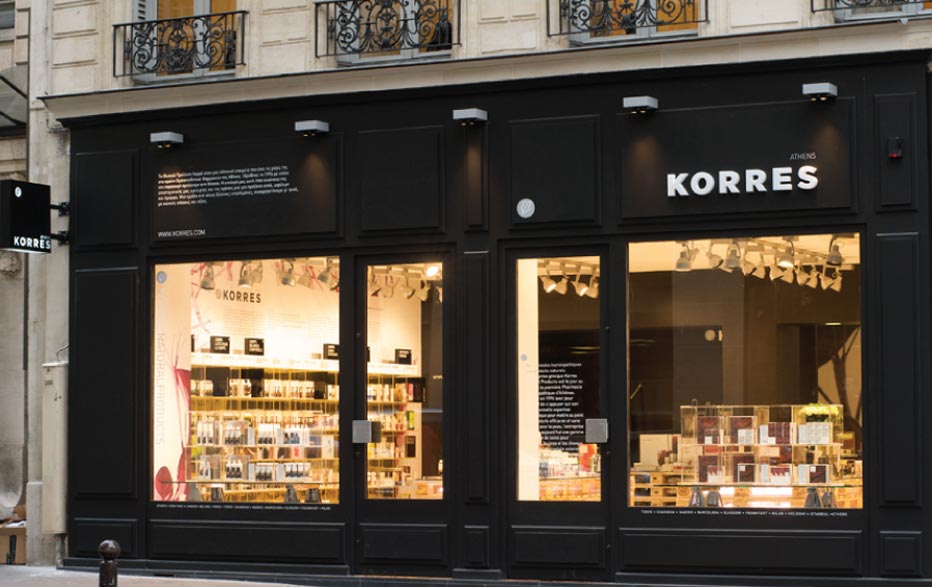 Long before Greek skincare became a global trend, there was a pharmacy in the centre of Athens where people came looking for something rather different.
They came for herbal remedies, homeopathic preparations and the knowledge of a young pharmacist who had become fascinated by the relationship between plants and health. What began there in the late 1980s would eventually become one of Greece’s best known beauty brands, with products found far beyond the country where the story began.
That pharmacist was Giorgos Korres.
While studying at the University of Athens’ School of Pharmacy, Korres began working at what the company describes as Greece’s oldest herbal and homeopathic pharmacy. In 1992, he took over the pharmacy and developed a laboratory for homeopathic remedies, eventually working with more than 3,000 herbal formulations. Word spread, first around Athens and then across Greece, and the experience shaped the philosophy that would lead to the creation of KORRES Natural Products in 1996.
The original idea was remarkably straightforward: use the natural ingredients of Greece to create products that were safe, effective and made with the kind of care that a pharmacist could stand behind.
At the time, however, natural beauty was not the cultural force it is today. The language of clean ingredients, botanical skincare and sustainable sourcing had not yet become part of mainstream beauty marketing. For Korres, it was less a trend than a consequence of where he came from and what he had learned behind the pharmacy counter.
Greece was already providing the raw material for the idea.
The country is home to thousands of plant species, including a remarkable number found nowhere else in the world. For a pharmacist who had spent years working with herbs, the landscape outside the pharmacy was effectively an enormous, largely unexplored laboratory.
Korres has since built an entire philosophy around that connection between Greek nature and modern science. The company says it works with local farmers and cooperatives across Greece, cultivating rather than wild harvesting its herbs in an effort to protect biodiversity while supporting rural communities. Its so called Full Circle approach follows ingredients from cultivation and extraction through research, formulation, production and, increasingly, recycling.
But the story of KORRES did not begin with a sophisticated skincare laboratory.
 The company’s first product was an aromatic herbal syrup made with honey and aniseed, inspired by rakomelo, the traditional Greek drink that Korres’ grandfather enjoyed in his hometown on Naxos. It was an unlikely beginning for what would become an international cosmetics company, but it reveals something important about the brand from the very start: science was never intended to be separated from Greek culture.
The first skincare product followed soon afterwards.
The Wild Rose Moisturizer was developed from the pharmacy’s popular Wild Rose oil, which customers had already been using as a remedy for the appearance of skin marks and discoloration. What had worked its way into the pharmacy through word of mouth became one of the foundations of the KORRES skincare business, and the Wild Rose line would eventually become one of the company’s best known products.
There was another important ingredient in the story: frustration.
As KORRES expanded, the company repeatedly encountered limitations in the existing supply chain. The natural formulas it wanted to create were not always possible with the ingredients, extraction facilities or manufacturing capabilities available in Greece.
Instead of simply accepting those limitations, the company began creating the infrastructure itself.
That decision eventually produced what KORRES calls its six lab sustainability circle. There is a formulation lab for developing products, a soil lab focused on cultivation and farming, an extraction lab for processing plant ingredients, a molecular lab for primary research, a production facility and a design lab. Together, they are intended to give the company control over much more of the journey from plant to finished product.
It is an unusually ambitious approach for a company that began in a pharmacy.
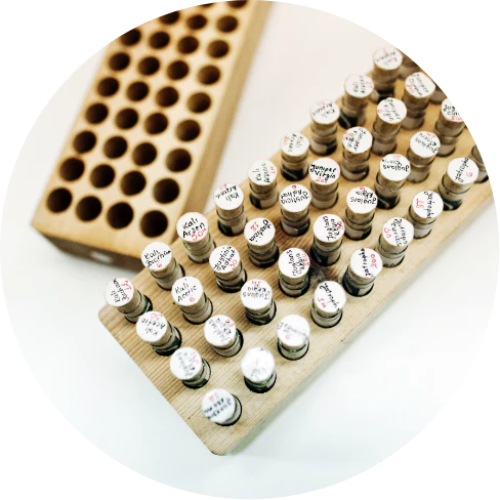
The formulation lab was established in 1999, at a time when the company’s pursuit of more natural formulations was far from fashionable. The first product developed there was the Greek Yoghurt Cooling Gel, inspired by the familiar Greek practice of using yoghurt to soothe skin after too much time in the sun. Today, KORRES says its R&D team develops close to 100 formulas a year and carries out more than 500 safety and efficacy tests on each product.
The company later took another significant step by creating its own production facility in Greece in 2006.
That decision was not simply about manufacturing capacity. It reflected a broader philosophy that has remained central to KORRES: if the company wants to control the quality and character of its products, it needs to understand and influence every stage of their creation.
That philosophy has led the brand into territory that goes well beyond traditional herbal cosmetics.
KORRES has invested in primary research into Greek plants and their active compounds, working with universities and research institutions and developing proprietary extracts. Its Black Pine range, for example, grew from research into a Mediterranean species capable of surviving drought, extreme temperatures and other harsh conditions. The company developed its own Black Pine bark extract and subsequently incorporated it into one of its major anti-ageing product lines.
Another example can be found in Santorini.
Instead of treating the island’s wine industry and cosmetics as completely separate worlds, KORRES worked with local producers to use residues from Assyrtiko grape production as a source of cosmetic ingredients. What would otherwise have been discarded became a high-polyphenol extract for use in skincare. It is a small example of a much larger idea: that sustainability is not simply about using natural ingredients, but about finding more intelligent ways to use what already exists.
This is where the KORRES story becomes particularly interesting.
There are plenty of beauty brands that use Greek ingredients. There are plenty that talk about nature, sustainability and tradition. What makes KORRES different is the extent to which those ideas have been turned into an operating philosophy.
The company says it works directly with farming communities and cooperatives, rather than simply purchasing anonymous ingredients through a conventional global supply chain. It has also invested in the research, extraction and manufacturing infrastructure needed to process Greek botanical ingredients within its own system.
In other words, Greece is not just part of the branding.
It is part of the supply chain.
That distinction matters.
Over the past two decades, the world has become increasingly interested in the things Greece has had around it for centuries: olive oil, yoghurt, herbs, honey, mountain plants, grapes and the knowledge associated with using them. The challenge for a Greek company is to take those familiar ingredients and give them a reason to matter to someone living thousands of miles away.
KORRES has managed to do that without completely abandoning where it came from.
Its packaging and visual identity may look at home in a modern department store in London, New York or Tokyo, but the ingredients and stories often lead back to Greece. Greek Yoghurt comes from a familiar tradition. Wild Rose came from a pharmacy remedy. Black Pine comes from the country’s forests. Olive oil comes from Greek farmers. Even the company’s first product was inspired by a family connection to Naxos.
That is perhaps the secret behind the brand’s longevity.
KORRES does not need to invent a Greek identity because it already has one.
The more difficult task has been translating that identity into something that can survive outside Greece.
And that is where the story that began in an Athens pharmacy becomes something larger.
A pharmacist working with herbs in the late 1980s could hardly have known that his fascination with natural ingredients would eventually lead to an international beauty company. But the underlying idea has remained remarkably consistent: start with nature, understand it properly, and find a way to turn that knowledge into something useful.
Nearly thirty years after KORRES was founded, that philosophy still points back to the same place.
Greece.
Not Greece as a postcard, and not Greece as a marketing slogan, but Greece as a source of plants, knowledge, communities and ideas.
Perhaps that is what makes KORRES more than another successful Greek export.
It is a reminder that sometimes the most powerful international stories are already sitting in your own backyard. You just have to look at them differently.
Short URL: https://www.choicetv.org.uk/?p=9514
